
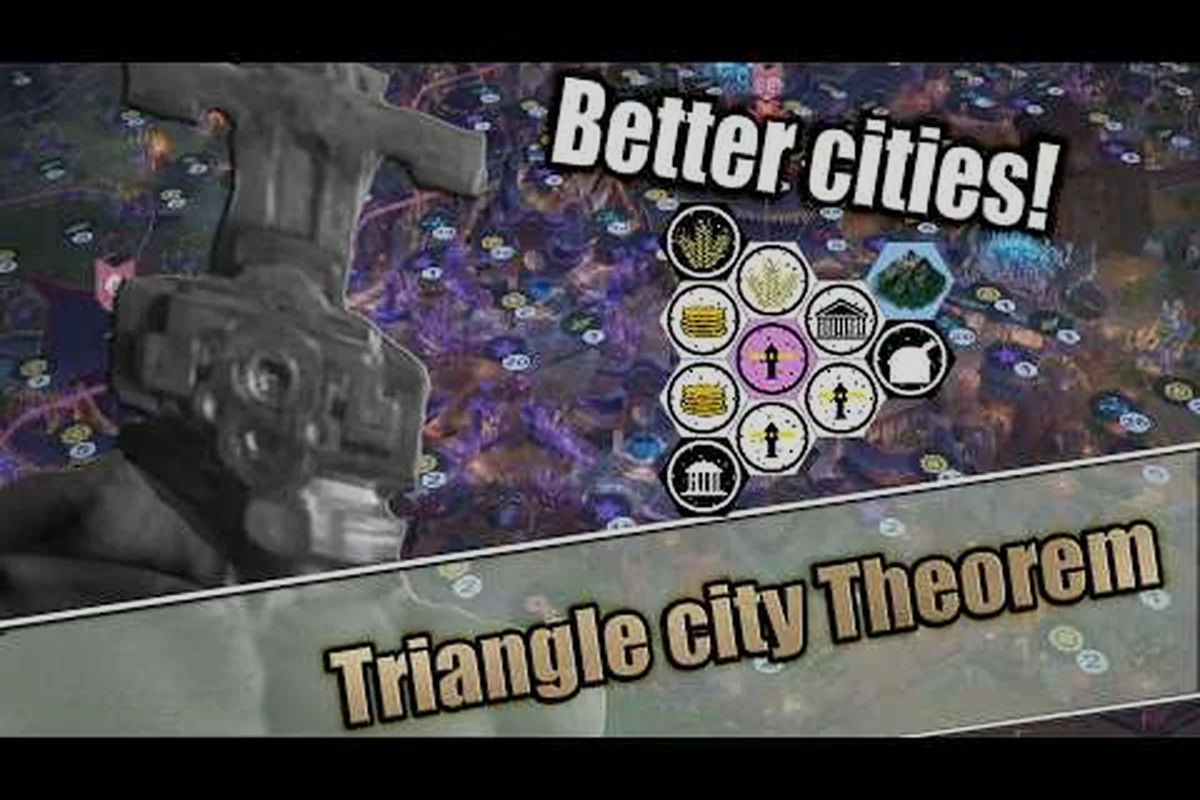
ENDLESS Legend 2's Industry yield is the backbone of every empire: it pays for districts, units, and wonders, and this industry guide shows you how to stack FIDSI bonuses, exploit anomalies, and out-build your rivals in the 1.0 era.
The FIDSI Engine: Why Every Yield Matters in ENDLESS Legend 2
Every city you settle in ENDLESS Legend 2 runs on the same five-stat engine: Food, Industry, Dust, Science, and Influence. Understanding how that engine, often shortened to FIDSI, ticks is the difference between a stalled empire and a snowball that absorbs its neighbors. The 1.0 release sharpened every lever in the system, and the September 2026 changelog confirms a wave of balancing passes aimed at making each tile placement feel consequential.
Industry is the most tactile of the five because it drives city expansion, unit production, and construction queues. Dust buys instant recruitment and luxury upkeep, science unlocks the next era of units and economic tech, and influence opens the diplomatic and annexation pipelines that let you absorb minor factions. Food keeps your population alive, and at high enough surplus it unlocks growth. The 1.0 changelog specifically rebalanced how Wood Ash Pit (now +20 food and +5 industry on farms at level 2 or higher) and Lubber Yard (now +5 industry on Works adjacent to Ridges) feed into the broader FIDSI loop, and the change to Alchemists' Commission is a clear signal that the developers want adjacency stacking to feel rewarding.
You will see the term FIDSI in almost every tooltip, faction ability, and quest reward, and it is the single most important acronym in the game. Treat it like a budget: every tile, every building, every hero assignment trades one yield for another, and the empires that survive Tidefall are the ones that learn to read the trade-offs in real time. Before diving into the deeper breakdowns of industry, dust, science, influence, and anomalies, the table below maps each stat to its primary output and the 1.0-era system that consumes it.
| FIDSI Stat | Primary Output | 1.0 System That Consumes It | Sample Adjacency Bonus |
|---|---|---|---|
| Food | Population growth, military upkeep recovery | City Center level, Tidefall survival | Wood Ash Pit (+20 food, +5 industry at farm Lv. 2) |
| Industry | Buildings, districts, units | City expansion, construction queues | Lubber Yard (+5 industry, Works on Ridges) |
| Dust | Instant recruitment, hero hires, upkeep | Order of Zelevas abilities, luxury buildings | Alchemists' Commission (+10 dust, Merchant House on deposit) |
| Science | Tech unlocks, era advances | Era thresholds, research projects | Library placement near anomalies |
| Influence | Diplomatic weight, minor faction annexation | Aspect abilities, council votes | Embassy stacking, hero assignments |
Reading the table top to bottom is the fastest way to internalize the loop. Food pays for the population that industry needs to staff new districts. Industry builds the workshops that produce the units science eventually upgrades. Dust keeps those units in the field without forcing you to choose between a standing army and a wonder push. Influence lets you peacefully absorb the villages and minor faction outposts that dot the map, and science is the engine that turns all four other yields into long-term victory leverage. If a stat feels weak in your current run, look at the table and ask which downstream system is suffering.
Industry Stacking: Tile Placement, Adjacency, and the 1.0 Rebalances
Industry is the workhorse of the FIDSI engine because it powers every queue in your empire. A city that produces +30 industry per turn will out-build a city producing +12 in roughly the same number of turns, and the gap widens once you add districts, wonders, and amplified adjacency chains. The 1.0 changelog directly addresses how industry spreads across the map with two changes that experienced players should not miss.
The first change is the Lubber Yard rebalance, which now grants +5 industry on Works adjacent to Ridges rather than the older flat bonus. The result is a meaningful buff for factions that naturally settle near mountainous terrain, including the Kin of Sheredyn, whose defensive playstyle already benefits from ridge chokepoints. The second change is the Wood Ash Pit rework, which now grants +20 food and +5 industry on farms at least level 2. This single tile is a flagship example of how 1.0 turned buildings into conditional power spikes that reward careful city planning rather than blanket spam.
Adjacency bonuses in 1.0 follow a consistent formula: place the right building on the right terrain, and the bonus compounds with every era of growth. Players who read the official ENDLESS Legend 2 changelog on Steam will recognize the pattern, because nearly every building mentioned in the patch notes was tuned around adjacency rules rather than flat outputs. The table below summarizes the highest-leverage industry sources available in 1.0 and the conditions that unlock their full value.
| Source | Industry Output | Unlock Condition | Best-Adjacent Terrain |
|---|---|---|---|
| Lubber Yard | +5 industry | Works adjacent to Ridges | Mountain Ridges |
| Wood Ash Pit | +5 industry | Farms at level 2 or higher | Forest tiles |
| Standard Workshop | +8 to +14 industry | Base game, all eras | Plains or Rivers |
| Amplifier | +20% to all yields | Post-Tidefall events | Any, multi-tile radius |
| Hero Specialty | +3 to +10 industry | Hero with Industry affinity | Assigned city |
Notice how every row in the table chains into a different system. The Lubber Yard pulls industry from a terrain feature, the Wood Ash Pit demands a farm upgrade, the standard workshop relies on your base FIDSI, the Amplifier scales every yield simultaneously, and a hero specialty stacks on top of all four. If you are wondering where to invest your next builder, scan the table and pick the row whose condition you can meet this turn. A city that already has three ridges next to a Works district will get more out of a Lubber Yard than a generic workshop, and the same logic applies to every adjacency building in 1.0.
One subtle change worth highlighting is the removal of the pop slots gain per City Center level. Pre-1.0, leveling your City Center granted additional population slots, which indirectly boosted industry by giving you more workers. The 1.0 change shifts that growth into deliberate population investment, meaning industry now scales more cleanly from tile bonuses and population assignment rather than from raw City Center spam. The practical effect is that a wide empire with thoughtful adjacencies will outpace a tall empire that relied on City Center leveling, and that rebalance feeds directly into the broader FIDSI philosophy of trading yields strategically.
Dust, Science, and Influence: The Soft-Currency Triangle
Dust, science, and influence are the soft currencies of ENDLESS Legend 2 because they do not build cities directly, but they unlock the actions that build cities faster, smarter, and wider. The 1.0 release deepened the interdependence of these three resources, and the most recent patch notes confirm that Amplifier-related bugs have all been fixed for release, which is critical because Amplifiers were the single most powerful influence/science multipliers in the late game.
Dust: The Instant-Action Currency
Dust is the only FIDSI yield that can be spent the moment it is generated. It funds instant unit recruitment, emergency hero hires, and the upkeep of high-tier units. The Alchemists' Commission rebalance in 1.0 is a perfect example of how the developers want dust to be earned: place a Merchant House next to a resource deposit, and you get +10 dust per turn. The Order of Zelevas Rogue faction takes this even further because the community design notes describe their ability to "use Dust to instantly recruit" units, removing the build queue entirely for a flat dust cost.
Players who ignore dust often find themselves stuck behind a research or build timer while a neighbor closes the gap with a sudden army. A solid dust baseline is at least +15 per turn by the mid-game, and the late-game target is +30 or higher if you plan to run a top-tier army or rush wonders. The simplest way to hit those numbers is to prioritize Marketplaces and Merchant Houses on deposit tiles, then stack a hero with Dust affinity in the city.
Science: The Era-Defining Engine
Science drives the era unlocks that gate your access to advanced units, better economic buildings, and victory conditions. The Tahuk faction in particular is described in community design notes as a science-focused faction, and the recent patch notes confirm that their narrative path obsession interacts with research pacing. If you play Tahuk, every science adjacency counts double, which is why the Amplifier's science multiplier can be game-ending when paired with the right hero.
For most factions, the science target is to unlock your next era within 15 to 20 turns of starting the research. A balanced empire should generate between +20 and +40 science per turn by turn 40, and anything above that allows you to leapfrog into a military or economic tech that your opponents cannot yet match. The community's tested baseline, drawn from player-reported benchmarks, suggests that Library placements near anomalies or rivers consistently outperform flat plains tiles, and the official ENDLESS Legend 2 store page confirms that exploration of strange anomalies is a core pillar of the game design.
Influence: The Quiet Power
Influence is the easiest FIDSI stat to undervalue because it does not visibly translate into a build queue or a research bar. Instead, it drives diplomatic weight, minor faction annexation, and the council votes that can swing a multiplayer or high-difficulty campaign. The Aspects faction is a diplomatic powerhouse because their ability to "symbiotically expand" with minor factions stacks influence gains into adjacency bonuses, and factional heroes with Influence affinity can push a single city over the annexation threshold that lets you peacefully absorb a village instead of conquering it.
The 1.0 balance pass also introduced a community-designed minor faction, The Mangrove of Harmony, which adds new influence-flavoured interactions for players who want to lean into the soft-power side of the FIDSI engine. Influence does not scale as explosively as dust or science, but it compounds quietly, and a player who can keep their influence gains steady at +8 to +12 per turn will eventually outvote and out-annex opponents who spent the same turns pushing raw industry.
Strange Anomalies: The Wildcard That Re-Shapes Your FIDSI
Strange anomalies are the late-game wildcard that the developers have been teasing since the early access era, and the 1.0 launch makes them a guaranteed part of every campaign. The official developer blog describes a world where the oceans have receded and ancient powers are resurfacing, and the anomalies are the physical manifestations of that change. Mechanically, they are map features that grant powerful FIDSI bonuses while also introducing a new layer of strategic risk.
Anomalies come in several flavors, but the ones most relevant to the FIDSI engine are resource anomalies and research anomalies. Resource anomalies boost one or more yields in their radius, and the effect stacks with your existing tile bonuses. Research anomalies generate science bursts when interacted with by a hero, and the science they grant can single-handedly push you into the next era. A subset of anomalies also interact with the post-1.0 Amplifier system, which the community has confirmed in patch notes now multiplies yields without the launch-window bugs that plagued the early access branch.
The table below maps the three anomaly types that appear most often in 1.0 matches, based on community testing and the public dev blog notes. Note that anomaly effects are always subject to faction and hero modifiers, so treat the numbers as a baseline rather than a hard cap.
| Anomaly Type | Primary Effect | Best Paired Stat | Risk Factor |
|---|---|---|---|
| Resource Bloom | +5 to +15 industry or dust in radius | Industry, Dust | Low — static bonus |
| Research Nexus | Burst of 50–200 science on activation | Science | Medium — hero must travel |
| Doomwraith Shrine | Negative FIDSI in adjacent tiles, lore rewards | Influence, late-game quest | High — corrupted penalty |
The Doomwraith row in the table deserves a closer look because the official dev blog explicitly calls out that Doomwraiths "settle in territories and slowly corrupt them, applying penalties to your cities and destroying minor faction villages." That corruption hits your FIDSI output directly, so a Doomwraith on your doorstep can erase the gains of a perfectly tuned tile layout. The risk is balanced by lore and quest rewards, and experienced players often treat Doomwraith territories as a controlled burn: accept the temporary penalty, complete the quest, and convert the cleansed tile into a permanent bonus.
Anomalies also tie into Tidefall, the recurring late-game event that drains the oceans and exposes new land. Players who have read our Tidefall exploration guide know that Tidefall is when anomalies become most numerous, and pairing the two systems is the single fastest way to scale your FIDSI economy into the endgame. If you want a deeper look at how anomalies reshape the map, the ENDLESS Legend 2 official dev blog walks through the design intent behind Doomwraiths, the Keeper of the Depths, and the way water binds the Lost.
The Complete FIDSI Plan for a 1.0 Campaign
A solid 1.0 FIDSI plan is built on three habits: read the table, place the tile, and re-evaluate every ten turns. The first habit forces you to consult the system before spending a builder. The second habit turns planning into action. The third habit keeps the plan alive as anomalies appear, factions shift, and Tidefall reshapes the map.
The First Ten Turns: Stabilize Food, Probe Industry
Your opening build order should always start with food, because a starving city cannot leverage any other yield. The 1.0 removal of City Center pop slot gains means you must invest population deliberately, and a Wood Ash Pit on a level-2 farm is the most efficient way to convert an early food investment into long-term industry. By turn 10, your capital should be hovering around +12 to +15 food, with at least one industrial adjacency in progress.
Turns 11 to 30: Layer Dust and Influence
Once food is stable, push for dust adjacency and influence infrastructure simultaneously. A Marketplace on a deposit and an Embassy on a minor faction village will both pay for themselves within 15 turns, and the diplomatic leverage from influence lets you peacefully absorb villages instead of spending industry on conquest. By turn 30, aim for +15 dust and +6 to +8 influence to keep your options open.
Turns 31 to 60: Scale Science, Stack Anomalies
Mid-game is when science and anomalies start paying off. Place a Library near any anomaly you control, and assign a science-focused hero to your research city. Amplifiers become available after the first Tidefall, and stacking one on a science-heavy city is the single most powerful economic move in the game. By turn 60, you should be generating +30 to +50 science per turn and fielding a Tier 3 army.
Turns 61 and Beyond: Pivot, Annex, and End
The late game is about converting FIDSI surplus into victory conditions. Influence-heavy empires should push for council victories or annex the last minor factions. Industry-heavy empires should pivot into wonder races or steamroller conquest. Science-heavy empires should race for the era-5 tech that unlocks the Keeper of the Depths, the most powerful unit in 1.0, which the dev blog confirms is "planned for" the late-game roster. If you are still finding your footing with the broader economic loop, our late-game economy guide breaks down the endgame priorities in more detail.
Frequently Asked Questions
What does FIDSI stand for in ENDLESS Legend 2?
FIDSI is the five-stat economic engine that drives every city: Food, Industry, Dust, Science, and Influence. Food fuels population growth, industry drives construction and units, dust funds instant actions, science unlocks eras, and influence powers diplomacy and minor faction annexation. Mastering the balance between these five yields is the core skill that separates a struggling empire from a late-game contender.
How does the 1.0 rebalance affect industry stacking?
The 1.0 patch tightened industry bonuses around adjacency rules, most notably by reworking the Lubber Yard to grant +5 industry on Works adjacent to Ridges and the Wood Ash Pit to add +5 industry on farms at level 2 or higher. The removal of the City Center population slot gain also shifts growth into deliberate tile investment, which means cities that plan their adjacencies now scale faster than cities that relied on raw City Center spam.
Are strange anomalies worth the risk?
Yes, because resource and research anomalies can dramatically boost your FIDSI economy once Tidefall exposes them. A single Research Nexus can push you into the next era, and a cleansed Doomwraith tile often becomes a permanent high-yield bonus. The risk is real, but the reward curve is steep enough that experienced players actively plan their expansion around anomaly clusters.
Which faction is best for a FIDSI-focused run?
It depends on which yield you want to emphasize, but community data suggests the Tahuk for science stacking, the Aspects for influence-heavy diplomatic play, the Kin of Sheredyn for industry anchored on ridge terrain, and the Last Lords for a pure-dust economy that skips food entirely. If you want a faction-by-faction breakdown, our best faction for science guide ranks the strongest science and diplomacy picks in the current meta.
How do anomalies interact with Amplifiers after 1.0?
Amplifiers in 1.0 multiply all yields in their radius without the launch-window bugs that affected the early access branch, which means stacking an Amplifier on a tile that already has a resource anomaly can produce the highest single-tile FIDSI output in the game. Pair the Amplifier with a hero who matches the anomaly's strongest stat, and you have a one-tile economy that can fuel a wonder push or a Tier 4 army on its own.