
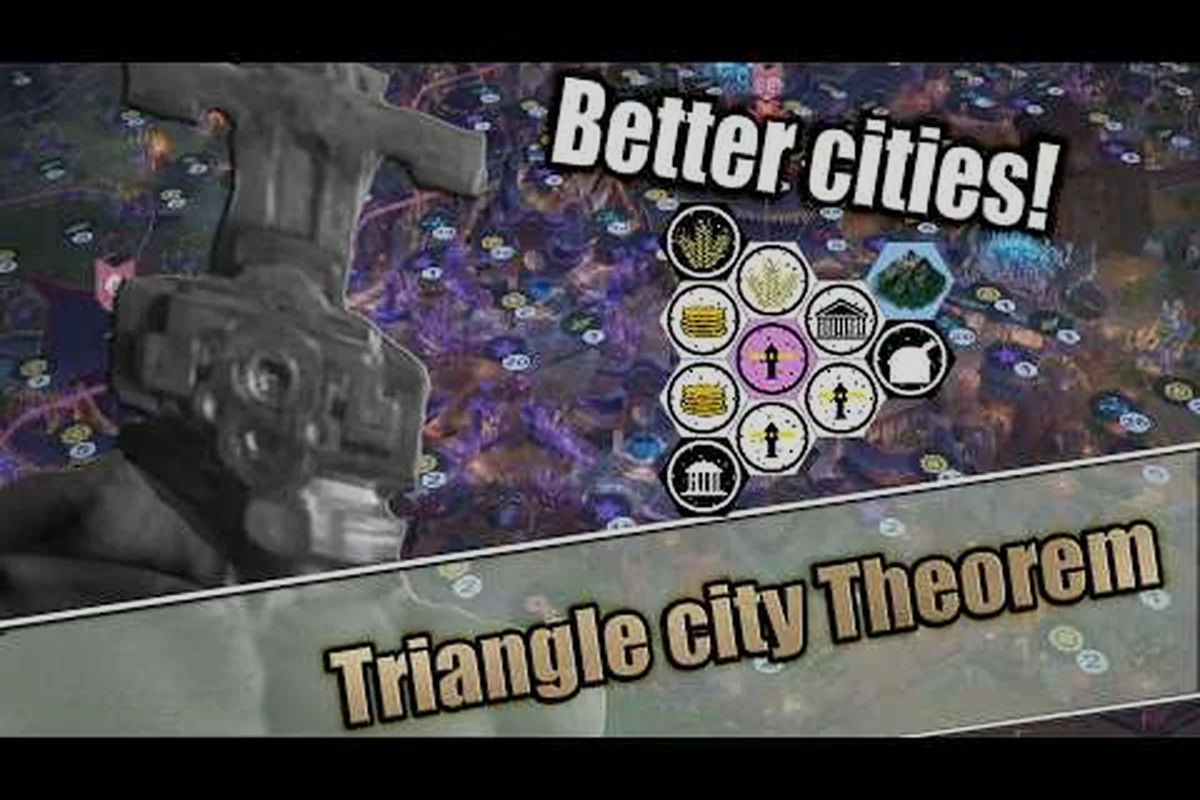
The 1.0 release of ENDLESS Legend 2 rebalanced every economy lever on Saiadha, from how dust flows through Merchant Houses to how Industry climbs on ridges and riverbanks. This ENDLESS Legend 2 economy guide walks you through the updated production chains, the FIDSI soft-currency triangle, and the practical steps for improving cities, settling new regions, and stacking dust income once Tidefall reshapes the map. The goal is simple: by the end of this article you will know exactly which ENDLESS Legend 2 city improvements to prioritize, when to expand, and how to keep your empire solvent through the Doomwraith cycle.
The 1.0 Economy Rebalance at a Glance
The September 17, 2026 launch of version 1.0 shipped a substantial set of economy tuning changes, and they form the foundation of any sensible production plan. According to the official Changelog 1.0 Release on Steam, three landmark building buffs headline the patch: the Alchemists' Commission now grants +10 dust on a Merchant House adjacent to a resource deposit; the Lubber Yard adds +5 industry on Works placed next to Ridges; and the Wood Ash Pit delivers +20 food plus +5 industry on Farms of at least level 2. Several legacy quirks were also cleaned up, including the removal of extra population slots from City Center leveling and a fix for the bridge district losing queued production when borders shifted.
The rebalance is a deliberate nudge toward adjacency-driven planning. Most of the new bonuses only fire when a specific district type touches a specific terrain feature, which means that simply building more tiles is no longer enough — where you build now matters as much as how many you build. A casual player who drops districts at random will see noticeably less Industry and Dust than a player who deliberately routes Farms next to Rivers and Works against Ridges.
The table below condenses the headline changes from the 1.0 Economy Rebalance into the precise numbers every empire-builder should internalize before founding a new region. Use it as a quick reference while planning your first three or four city improvements, then layer in faction-specific biases and hero bonuses only after the adjacency triggers — the Wood Ash Pit alone can swing a capital's Food output by 20 per Farm tile, and stacking two Lubber Yards against adjacent Ridges routinely doubles the Industry a Works district delivers compared to the 0.9 baseline.
| Building or System | 1.0 Effect | Trigger Condition |
|---|---|---|
| Alchemists' Commission | +10 Dust | Merchant House adjacent to a resource deposit |
| Lubber Yard | +5 Industry | Works district adjacent to Ridges |
| Wood Ash Pit | +20 Food, +5 Industry | Farm of level 2 or higher |
| City Center leveling | Population slots removed | System-wide simplification |
| Bridge district | Queue no longer lost on border change | Reliability fix |
| Pacified villages | No longer invisible | Diplomacy clarity fix |
These numbers are not universal: each faction has its own bias and may shift yields by a few points through unique buildings or heroes. Even so, the trend is consistent — adjacency planning and resource-deposit awareness have replaced raw tile count as the dominant economy philosophy in 1.0.
The FIDSI Engine: Food, Industry, Dust, Science, Influence
Every tile improvement and city structure in ENDLESS Legend 2 ultimately funnels into the five-yield FIDSI engine, and learning to read those five letters is the single most important economy skill you can pick up. Food keeps your population alive and growing; Industry builds units, buildings, and wonders; Dust pays for unit upkeep, hero recruitment, and diplomatic deals; Science unlocks the next era of the tech tree; and Influence extends your borders so you can claim more tiles in the first place. The strength of the 1.0 meta is that every yield has at least two or three strong engines, so there is no single "correct" yield to chase.
A common mistake among new players is treating Dust as the only flexible currency and ignoring Food. Food actually gates how fast you can build new districts, and a city that hits a Food wall on turn 35 will stall its entire production queue. Conversely, a player who only farms and forgets Dust will be unable to recruit heroes or maintain armies once Tidefall begins. The healthiest empires balance at least three of the five yields at any given time and let the fourth or fifth fall behind for a few turns while the dominant engine compounds.
A simple read of how each yield tends to play out across the early, mid, and late game looks like this: Food scales with city count and river Farm upgrades, Industry snowballs once you stack Lubber Yards on Ridge tiles around turn 30, Dust pivots from Marketplaces to Alchemists' Commission and Stock Exchange beats, Science is gated by your faction bias choice, and Influence ramps through Pacify actions before transitioning into global Annexation plays — each curve rewarding different FIDSI priorities at different stages.
| Yield | Early-Game Focus | Mid-Game Focus | Late-Game Focus |
|---|---|---|---|
| Food | Found second city, plant Farms | Upgrade to Farm level 2 near Rivers | Hydroponic Spires, Temple of Abundance |
| Industry | Build City Center, first Works | Lubber Yard stacking on Ridges | Wonder construction, late-tier units |
| Dust | Marketplace, basic Trade Routes | Alchemists' Commission, Mercenary deals | Stock Exchange, mercenary upkeep, hero gear |
| Science | Tier 1 research, pick a faction bias | Tier 2 unlocks, colonization techs | Late-era victory path techs |
| Influence | Border expansion, first Pacify actions | Hero governor assignments, Wonders | Global Annexation, ideological wonders |
If you want a deeper read on how FIDSI evolves after the 1.0 rebalance, the ENDLESS Legend 2 late-game guide covers how late-era techs and Wonders reshape the soft-currency triangle.
Food First, But Not Food Only
The first 20 turns of any campaign are dominated by Food pressure. Your starting settler can only carry so many population units, and you need surplus Food to grow your capital and unlock additional city tiles. A practical rule of thumb: keep your Food surplus positive by at least 4–6 each turn through the first 25 turns, then allow the surplus to shrink once your second city is founded and the capital can focus on Industry.
Once both cities have stable Food, the script flips. You want to retire at least one Farm from each city and replace it with a Works or a Science district. The reason is that adjacency bonuses on Farms diminish quickly after level 2 in 1.0, while Works and Science districts scale harder because they unlock more downstream buildings. Treat the Farm as a transitional tool rather than a permanent backbone.
Production Chains and the City Improvement Stack
Production in ENDLESS Legend 2 is the literal measurement of how many Industry points you accumulate per turn, and the city improvement stack is the engine that turns raw Industry into real military and economic output. A typical Works district starts at around 6–8 Industry per turn with no adjacency bonuses, and a well-placed Works next to a Ridge or River can climb above 15 Industry before any hero or technology modifier is layered in.
Works receives top billing in the 1.0 patch because the new bonus reshapes city planning: each upgraded Works now adds a flat +2 Industry and a stacking adjacency multiplier that only activates when placed within one tile of a Ridge, River, or Strategic deposit, which is why rushing a Works tile in your Capitol by turn 8 typically outperforms a military unit build. Because adjacency is the real lever, planning the next two tiles before settling a new region is worth more than any single hero assignment, and players who skip this step usually discover the gap around turn 40 when their Industry curve flatlines.
-
Ridge + Works + Lubber Yard: This triple yields a base of around 15–18 Industry per turn on a single tile cluster and is the strongest industrial micro-build available to most factions.
-
River + Farm (level 2) + Wood Ash Pit: Designed for food-belt cities that still need a few Industry points, this pattern is common on second and third settlements.
-
Resource deposit + Merchant House + Alchemists' Commission: The Dust-side analogue to the Ridge cluster, perfect for trade-hub cities that sit on top of a Luxury or Strategic resource.
These three patterns cover the majority of city improvement decisions in 1.0. Layered correctly, a four-city empire can hit 80–100 Industry per turn by turn 60 without dipping into Wonders, which is a comfortable pace for both unit spam and infrastructure investment.
Build Order Discipline
Build order discipline matters more than raw adjacency optimization for newer players, because an unoptimized order can lock you out of the key buildings you need, and the city's queue often stalls mid-sequence if the District or Industry infrastructure is missing. A reliable opening sequence for most factions therefore begins by solving the bottleneck yield first (Dust via Marketplace or Influence via Temple), then placing the Works district to unlock the Industry cost of subsequent improvements, and only then layering adjacency-heavy tiles like Farms on River or Lubber Yards on Ridges, since those compound gains are wasted if earlier buildings never finish.
| Priority | Building | Why It Comes First |
|---|---|---|
| 1 | City Center (already built) | Foundation of every yield |
| 2 | Marketplace or Alchemists' Commission | Solves Dust before it becomes a crisis |
| 3 | Works district | Provides the Industry to actually queue buildings |
| 4 | Farm (level 2) near River | Stabilizes Food for the next settler |
| 5 | Lubber Yard on a Ridge tile | Compounds Industry from this point forward |
| 6 | Merchant House on a resource deposit | Locks in the +10 Dust adjacency bonus |
Players who follow this order rarely get into a position where they have built too many expensive buildings and cannot afford unit upkeep. A common alternative is to swap the Marketplace for a Temple in factions that rely on Influence (such as the Aspects), but the principle is the same: solve the bottleneck yield first, then compound it.
Settling New Regions and the Region Layer
Saiadha is a multi-region world, and ENDLESS Legend 2 region guide principles are now inseparable from the economy. Each region has its own terrain palette, its own set of resource nodes, and its own adjacency ceiling. Choosing where to settle is therefore the most consequential economic decision of the first 40 turns, and it has a direct line to the question of when to expand.
A practical heuristic is to always scout two regions ahead of your current frontier before founding a new city. The cost of an over-eager settler is enormous: a city founded on top of mediocre terrain will spend 30 turns catching up to a city founded on Ridges, Rivers, and Luxury deposits that you could have discovered with one extra scout. A well-scouted region can leapfrog a poorly placed one by 15–20 Industry per turn within ten turns of founding.
When to Found, When to Annex
The "found vs. annex" decision tree is the second pillar of regional economy. Founding a new city costs Influence, a Settler unit, and several turns of slowed production, but it also creates a long-term growth engine. Annexing a minor faction village gives you immediate tiles and yields, but it does not give you a fresh city center and it cannot level up into a new production hub.
Most 1.0 campaigns should follow a roughly 60/40 split: found three new cities for every two minor faction villages you annex. The exception is the early game, when Annex is essential for sealing borders and grabbing Strategic resources. If you need Dust and Influence fast, annex; if you need Industry and Food for the long run, found.
| Action | Cost | Reward | Best Moment |
|---|---|---|---|
| Found new city | 1 Settler, Influence, slow start | Long-term Industry and Food engine | Turn 25–60, after Food surplus is solid |
| Annex minor faction village | Influence and a Pacify action | Immediate tiles and a small yield bump | Turn 10–30, when you need quick Influence |
| Build Wonder | Dust and Industry sink | Global yield or unique bonus | Turn 80+, when production chains are stable |
The relationship between expansion and economy is also covered in the ENDLESS Legend 2 city guide, which breaks down district adjacency in more detail. There, the adjacency math for a fresh city center shows why a founded region outperforms two annexed villages by Turn 40: each district slot gains +1 to +3 yields from neighboring improvements, scaling the city's Industry and Food output beyond what a single Pacify action ever delivers. For example, a founded region on a Stratigic resource tile can stack a +25% Industry bonus with a +15% Science bonus, while annexed villages only contribute raw tile yields without any adjacency multiplier.
Strategic vs. Luxury Resources
Every region contains two flavors of resources, and confusing them is a frequent beginner mistake. Strategic resources like Tempered Alloy and Hyperium are required to recruit advanced units, while Luxury resources such as Amber Spice or Saiadhan Silk generate Dust and Influence when exploited by a Merchant House or a Temple. A good empire-build plan reserves Strategic resources for unit production hubs and Luxury resources for trade-hub cities.
The 1.0 patch rebalanced a handful of these bonuses, so the payoff for correctly routing a Luxury resource through a Merchant House is even higher than before. The official ENDLESS Legend 2 store page confirms that resource management is a key advertised feature, and community testing on the launch patch shows that a single exploited Luxury resource in a trade-hub city can add 15–25 Dust per turn by the mid-game, which is enough to fund a second army.
Dust Income: Soft-Currency Mastery
Dust is the most fragile yield in 1.0, because it has the most competing demands. It pays for hero recruitment, hero equipment upgrades, unit maintenance, bribes in diplomacy, and emergency buyouts at the Mercenary camp. A player who neglects Dust will find their armies disbanding at the worst possible moment, while a player who over-prioritizes Dust will starve their Industry and Science engines.
The ideal Dust curve looks like a slow climb for the first 30 turns, a sharp rise from turn 30 to turn 80 as Merchant Houses and trade routes come online, and a steady plateau after that. The plateau is healthy: it means you have enough Dust to maintain armies and recruit heroes without constantly selling strategic resources or begging for trade deals.
A few high-impact Dust sources deserve specific mention, particularly the late-game Merchant House synergies and the often-overlooked governor stacking technique that can swing your Dust income by 15-20 Dust per turn on a mature economy. Watch your regional resource pool closely around turns 30-50, because that is when converting a spare Strategic resource tile into a Merchant House adjacency bonus often delivers a higher Dust-per-invested-Industry ratio than building a fourth extractor's worth of infrastructure.
-
Alchemists' Commission (+10 Dust): Triggered by placing a Merchant House on a Luxury or Strategic resource deposit. One of the most reliable late-blooming Dust engines in the game.
-
Trade Routes: Connect cities that have complementary yields. A high-Industry city trading with a high-Dust city is more productive than two self-sufficient cities trying to do everything.
-
Hero governors with Dust traits: Several heroes gain Dust bonuses when assigned as governors. Layering two of these heroes into your trade-hub city is a common community-tested trick.
-
Pacified minor factions: Annexing a faction village often unlocks a one-time Dust boon and a small ongoing bonus.
The Mercenary and Maintenance Trap
A surprisingly common Dust sink is over-recruiting heroes. Each hero adds a flat Dust upkeep cost that scales with the level of their equipment and the rarity of their skills. A player who recruits every hero they encounter will quickly find their Dust surplus turning into a Dust deficit, even with a fully developed trade network. The fix is to maintain a small "active" bench of three to five heroes and rotate the rest into the Reserve or, in extreme cases, retire them once their key skills have been transferred or learned.
Improving Cities Through Heroes and Doctrine
City improvements are not only about districts and buildings. Heroes, Doctrine orders, and faction-specific abilities all stack on top of your base yields, and a well-governed city can out-produce a poorly governed one by 30–40 percent even with identical tile layouts. The 1.0 meta rewards players who assign at least one hero as a City Governor in every city, because governors convert unused hero skills into local bonuses.
The first city improvement players usually overlook is the Doctrine system. Doctrines are empire-wide passives that unlock through research and are applied with a single click in the empire panel. The Industry, Dust, and Food doctrines are the most cost-effective choices in 1.0 because they compound across every city simultaneously, while military doctrines are better left until your army composition is final.
| Governor Type | Best For | Key Bonus |
|---|---|---|
| Industry Hero | Production hubs | +Industry on Works tiles |
| Dust Hero | Trade hubs | +Dust on Merchant Houses |
| Food Hero | Frontier cities | +Food on Farms |
| Influence Hero | Border cities | +Influence on border tiles |
| Balanced Hero | Capital or second city | Modest bonus across all five yields |
A second common blind spot is hero equipment. Even a basic +1 Dust or +2 Industry gear piece can shift a borderline city into the green, and because hero gear is persistent across the campaign, the long-term payoff is significant. The late-game economy pieces in the ENDLESS Legend 2 late-game guide explore how gear and doctrines stack in concert.
Economy After Tidefall: The Doomwraith Cycle
Tidefall is the most disruptive single event in the campaign, and the 1.0 economy rebalance has special provisions for it. The ENDLESS Legend 2 Tidefall guide explains the geography shifts in detail, but the economy angle is simple: as sea levels rise, coastal tiles flood and disappear, which can wipe out entire Farm or Merchant House clusters in a single event. The empires that survive economically are the ones that already have at least one inland production hub, not just a coastal capital.
A practical Tidefall-prep checklist looks like this: walk your territory at turn 25–30 and confirm each Faction's capital sits on at least two non-floodable terrain rings (Forest, Ruins, or elevated Ridge), then queue a second City Improvement slot on any coastal hub so an Inland Granary or Dust-Workshop conversion is one turn from completion. Audit your Region's current adjacency bonuses — if your best Food multiplier is locked to a coastal Farm that the Doomwraith event will submerge, settle a new region inland by turn 40 and reroute the Caravan chain before the sea rises. Finally, stockpile 200–300 Dust and at least one unused Pioneer unit so the post-Tidefall map reveal can be exploited immediately with a fresh settlement on a newly exposed Ridge or Mine deposit.
-
Maintain at least one inland city with positive Food, Industry, and Dust before turn 50.
-
Avoid placing your most important Wonders on coastlines.
-
Build a reserve of 200–300 Dust by turn 60 specifically for emergency city foundations.
-
Assign a defensive hero to your trade-hub city so it does not get picked off during the Doomwraith emergence.
Once Tidefall has run its course and new islands and ridges are revealed, the same rules apply, but with new adjacency opportunities. Many players find that the post-Tidefall economy is actually stronger than the pre-Tidefall economy, because the new ridges and exposed resource deposits are often worth more than the coastal tiles that were lost. The communities report that this is a deliberate 1.0 design goal, and it gives empire-builders a real second wind in the mid-game.
A Turn-by-Turn 1.0 Economy Roadmap
To convert the principles above into a working campaign plan, it helps to map the economy work to specific turn windows. The table below is a turn-by-turn summary of the priorities for a balanced faction on standard difficulty in 1.0.
| Turn Range | Primary Focus | Secondary Focus | Key Buildings or Actions |
|---|---|---|---|
| 1–15 | Stabilize Food, scout second region | Pick a faction bias | Build City Center, scout, first Farm |
| 15–30 | Found second city, secure first Luxury | Build Marketplace | Alchemists' Commission if possible |
| 30–50 | First Works on a Ridge, first Trade Route | Assign a governor | Lubber Yard, Merchant House |
| 50–70 | Found third city, prepare for Tidefall | Stockpile Dust | Wood Ash Pit, second Works |
| 70–90 | Expand into post-Tidefall ridges | Build first Wonder | Choose a victory-path economy wonder |
| 90+ | Layer Doctrine bonuses, finish victory | Optimize hero gear | Late-game Wonders and victory conditions |
A common theme across every phase is adjacency. Whether you are improving a capital or settling a new region, the rule is the same: place Works on Ridges, place Farms near Rivers, place Merchant Houses on resource deposits, and place Temples or Sanctuaries on Luxury tiles. The 1.0 economy rewards consistent, deliberate placement far more than rapid expansion, and players who internalize that lesson will outpace players who simply spam cities.
Frequently Asked Questions
What is the single best early-game economy improvement in 1.0?
For most factions, the Alchemists' Commission (+10 Dust) is the highest-value opening improvement because Dust is the most fragile yield and the +10 bonus unlocks a Merchant House adjacency on a resource deposit. The Lubber Yard is a strong second choice if you already have Dust secured.
When should I settle a new region instead of annexing a minor faction village?
Found a new city when you have a stable Food surplus, a viable Settler, and a scouted region with Ridges, Rivers, or a Luxury resource. Annex a village when you need immediate Influence or Strategic resources, or when your Influence budget cannot yet afford another founding.
How do Tidefall events hurt or help my economy?
Tidefall floods coastal tiles, so any Farm, Merchant House, or Wonder on a coastline can be lost. Inland production hubs are usually untouched, and the receding seas often reveal new ridges, deposits, and Luxuries, which makes the post-Tidefall economy stronger for prepared players.
Are Doctrines worth the Dust cost in 1.0?
Yes, because Doctrines apply to every city simultaneously and compound your adjacency bonuses. The Industry, Dust, and Food doctrines are the most cost-effective, and players who activate them by turn 60 typically see a 20–30 percent stronger empire by the late game.
How can I fix a Dust deficit without pausing expansion?
Reduce hero upkeep by retiring low-impact heroes, sell excess strategic resources on the market, and route an existing high-Dust city into a Trade Route with your capital. A single well-placed Alchemists' Commission can also swing a deficit back into the green within ten turns.