
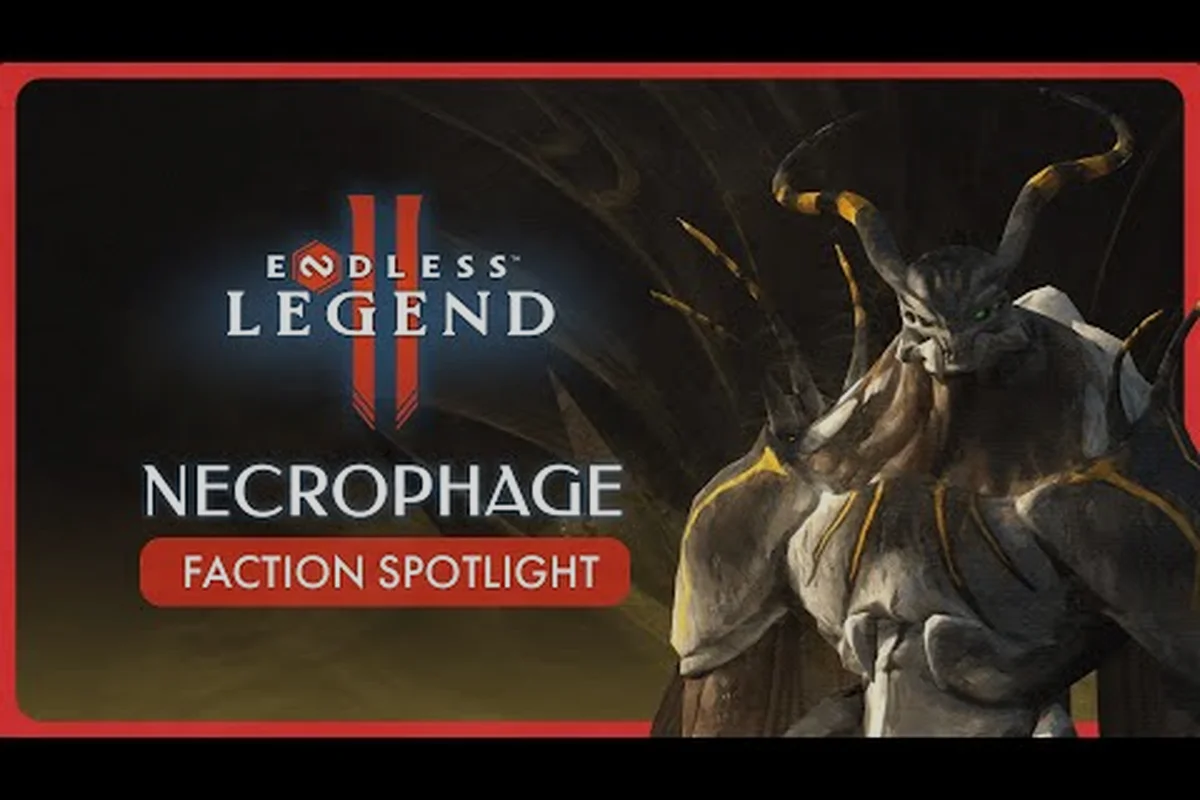
The ENDLESS Legend 2 Necrophage faction breaks every traditional 4X convention: their population does not eat food, they grow stronger from combat losses, and their entire economy revolves around consuming the battlefield. For players who want a faction that rewards aggression over patience, mastering the ENDLESS Legend 2 Necrophage strategy turns corpse-fueled expansion into a relentless war machine that snowballs faster than any peacetime economy could match.
Understanding the hive requires grasping three pillars: how Brood Spawning replaces growth, how Carrion Economy converts kills into industry, and how to leverage the Necrophage early game before the Last Lords or Tahuk can close the distance. This guide covers the mechanics, opening build order, mid-game power spikes, and matchup-specific advice across the eight factions shipped at 1.0.
Necrophage Core Mechanics and Identity
The Necrophage belong to a wider design philosophy that Amplitude Studios showcased in their 1.0 launch: each faction should feel like a different genre. Where the ENDLESS Legend 2 on Steam page describes the Last Lords as cursed knights running a pure Dust economy, the Necrophage skip food entirely and treat every dead unit on the battlefield as a future citizen.
Population Without Food
The defining trait is simple on paper and brutal in practice: Necrophage units do not consume food. They reproduce through Brood Spawning, a mechanic that generates new units after a successful battle based on the number of enemy casualties inflicted. A skirmish that kills eight enemy infantry can hatch roughly two additional Necrophage units at the end of the turn, while a full army wipe can spawn three or more, depending on research and hero bonuses.
This creates a unique resource pressure. Instead of balancing food surplus against city count, Necrophage players balance corpses-per-turn against expansion. The more battles you fight and win, the faster your army grows — but losing a battle costs you future spawns as well as current units.
Carrion Economy and Industry
The Necrophage replace the standard industry chain with Carrion, a resource generated from battlefield remains. Carrion feeds both unit upkeep and infrastructure building, meaning a Necrophage economy actually scales with combat output rather than tile improvements. A player who fights three winning battles per turn produces more industry than a peaceful builder, which is the inverse of how the Sandshapers or Aspects play.
| Resource | Standard Faction | Necrophage Equivalent |
|---|---|---|
| Food | Required for all population | Not consumed |
| Industry | Generated by assigned pops | Generated via Carrion from kills |
| Dust | Standard accumulation | Standard accumulation |
| Growth | Build/buy in cities | Brood Spawning after battles |
| Science | Standard | Standard, but research bias favors military |
Comparison With Other 1.0 Factions
The 1.0 release shipped with six major factions and two rogue variants, each tuned to a different playstyle. According to the official State of the Game post on Steam, Lead Designer Pierre Soriot personally owns the Necrophage and Tactical Battles, which signals a design intent favoring aggressive, combat-driven decision-making.
| Faction | Identity | Win Condition | Friction With Necrophage |
|---|---|---|---|
| Necrophage | Hive, corpse-fueled | Snowball via combat | — |
| Last Lords | Cursed knights, no food, pure Dust | Economic dominance | Mirror match on Dust |
| Tahuk | Religious + scientific zealots | Narrative path completion | Long-game threat |
| Sandshapers | Sand spirits, terraform via ruins | Map control | Area denial |
| Kin of Sheredyn | Star paladins, fortress play | Defensive attrition | Hardest early defense |
| Aspects | Coral diplomats, minor faction symbiosis | Influence victory | Hard to attack |
| Order of Zelevas (Rogue) | Expansion-locked abilities, no cap | Wide map control | Speed race |
| Severed Claws (Rogue) | Slave-hive variant of Necrophage | Pure aggression | Ally or rival |
Early Game Opening Build Order
A solid Necrophage start prioritizes a single stack capable of clearing villages, defending against the Last Lords or Order of Zelevas pressure, and triggering the first Brood Spawning before turn 15. Misallocating early industry to wide expansion instead of army quality is the most common opening mistake reported by community testing on the Amplitude forums.
Turns 1–10: Foundation Phase
Move your first hero toward the nearest minor faction village while queuing a Carrion Pit in your capital. The Carrion Pit replaces the standard industry building and unlocks the first Brood Spawning slot, which is essential for compounding your army. Spend influence on a defensive pact only if the closest neighbor is the Kin of Sheredyn — otherwise bank influence for a later alliance bid.
| Turn | Priority Action | Reason |
|---|---|---|
| 1 | Move hero to village | Free unit and influence |
| 2 | Queue Carrion Pit | Unlocks Brood Spawning |
| 4 | Research military tech tier 1 | Faster first spawns |
| 6 | Annex nearest village | Build a forward spawn point |
| 8 | Declare war on weakest neighbor | First big Carrion payout |
| 10 | Engage with hero + 4 units | Trigger first Brood Spawning |
Turns 11–20: First Brood Cycle
The first Brood Spawning cycle is the most important power spike in the Necrophage timeline. According to community data summarized in player faction spotlights, a well-executed first cycle can field a stack of 8–10 units by turn 20, which matches the army size most factions reach on turn 30 with peaceful play. Use this window to either secure a second city through conquest or clear a Tidefall-vulnerable region before water recedes further.
Players comparing faction pace often consult the broader ENDLESS Legend 2 faction comparisons breakdown to decide whether their opponent will pressure them early or race for a late-game victory condition.
Mid-Game Power Spikes and Army Composition
Once the Necrophage survive to turn 40, they transition from an aggressive scaler into a dominant war machine. The key is layered spawning: each battle feeds the next, and research unlocks allow higher-tier Brood Spawns that can replace losses mid-campaign.
Army Composition by Role
Necrophage armies benefit from a frontline-heavy composition because the faction's core identity is melee grind. Ranged units exist but require more setup turns than the Last Lords' pure Dust economy can afford, which is why an ENDLESS Legend 2 Last Lords guide typically recommends ranged stacks as a counter to this kind of slow-march.
| Role | Unit Tier | When to Add |
|---|---|---|
| Tank | Tier 1 melee | Turns 1–20 |
| Bruiser | Tier 2 melee | Turns 20–35 |
| Skirmisher | Tier 2 ranged | Turns 25–40 |
| Elite | Tier 3 melee | Turns 40+ |
| Support Hero | Affinity-locked | Whenever available |
Hero Affinity and Spawning Synergy
Necrophage heroes have unique perks that interact with Brood Spawning: certain affinities increase spawn count after battles fought near the hero, while others grant Carrion bonuses per kill. Picking a hero that aligns with your planned army composition matters more than raw combat stats, because the Necrophage win condition depends on sustained combat rather than a single decisive battle. For a deeper breakdown of which heroes pair best with each faction, the Necrophage hero spotlight covers every 1.0 launch option.
Matchup-Specific Strategy
Because the Necrophage are a combat-driven faction, their matchup chart reads differently from a builder faction. Winning the resource war matters less than winning the engagement war, which is why each opponent requires a tailored opening.
Vs Last Lords (Mirror-Style Economic Race)
The Last Lords share the Necrophage trait of ignoring food but substitute Carrion with pure Dust scaling. According to the faction design notes shared in the official Rogue Factions announcement, they can field a Dust-fueled army that out-recruits slower factions but lacks the Necrophage's per-kill scaling. Pressure them before turn 30; if they survive into the late game, their Dust advantage compounds.
Vs Tahuk
The Tahuk are a religious + scientific faction that can complete a narrative victory path if left alone. Their ranged strength makes them dangerous in defensive terrain, which is why a direct assault without scouting is risky. For a deeper look at how their zealot mechanics play out, the ENDLESS Legend 2 Tahuk guide explains their preferred narrative-track timing. Against the Necrophage, the Tahuk win by reaching their late-game path completion, so the counterplay is to deny them breathing room with constant harassment rather than a single decisive push.
Vs Sandshapers
The Sandshapers are a 1.0 addition designed around terraforming ruins into desert tiles. They excel at area denial and can shut down melee rushes by reshaping the terrain around your army. An ENDLESS Legend 2 Sandshapers guide typically recommends patience and economic stacking, which is the opposite of the Necrophage tempo. The counter is to engage them before they finish their preferred map shape, ideally between turns 25 and 35 when their terraforming infrastructure is still incomplete.
Countering the Zelevas Territory Machine
The Order of Zelevas is a rogue variant of the Kin of Sheredyn that gains abilities from expanding territory instead of building fortifications, removes its city cap at the highest unlock, and recruits all units instantly. This makes them the fastest expansion threat on the board. A direct comparison is laid out in the ENDLESS Legend 2 Order of Zelevas guide, which highlights their zero-recruit-time advantage as the defining feature. Against the Necrophage, the Order of Zelevas wins the speed race; the Necrophage win the casualty war. Force engagements before they reach their full city count, because their instant recruit means losing one battle is not a setback for them.
Late Game Victory Conditions and Endgame Scaling
By turn 60, the Necrophage have either snowballed into an unstoppable hive or been contained by an opponent who stabilized their food economy. The endgame is where the faction's design philosophy shows its biggest payoff — and its biggest weakness.
When the Snowball Works
A successful Necrophage campaign fields 12–15 units per army, multiple stacks on the front, and a capital generating 30+ Carrion per turn. At that point, the faction effectively outscales every peacetime economy because every battle feeds both the next battle and the next city improvement. Tidefall events, which the official Amplitude dev blog on the End of the World describes as recurring water-receding mechanics that spawn Doomwraiths, actually favor the Necrophage: Doomwraiths settle in territories and corrupt them, but the Necrophage do not rely on tile-based food income, so corruption is less punishing than for the Tahuk or Sandshapers.
When the Snowball Fails
The Necrophage lose when their kill economy dries up. A prolonged peace gives the Last Lords time to scale Dust, the Tahuk time to complete their narrative path, and the Aspects time to lock down influence victories. If a Necrophage player cannot find a war by turn 35, they should pivot to a defensive posture and prepare for a long-game resource war — which the faction is poorly tuned to win.
| Stage | Necrophage Tempo | Opponent Counter |
|---|---|---|
| Turns 1–20 | Aggressive, fast spawns | Scout with flying units |
| Turns 20–40 | Dominant in combat | Stack ranged, deny engagements |
| Turns 40–60 | Maximum snowball | Hard to stop without prep |
| Turns 60+ | Either wins or stalls | Late-game victory conditions |
Frequently Asked Questions
What is the best Necrophage opening build order in ENDLESS Legend 2?
The strongest opening queues a Carrion Pit on turn 2, scouts the nearest village on turn 1, and declares war on the weakest neighbor by turn 8. This timing triggers the first Brood Spawning before turn 15 and gives you an 8–10 unit stack while most opponents are still building their first expansion. Skipping the early war is the most common reason new players stall out before the mid-game power spike.
How does the Necrophage compare to the Last Lords?
The Last Lords skip food and run a pure Dust economy that scales with research, while the Necrophage skip food and run a Carrion economy that scales with combat. In direct matchups, the Last Lords win the long resource game and the Necrophage win the casualty war, so the deciding factor is usually who lands the first decisive engagement before turn 30. If you are choosing between them for a campaign, the Necrophage rewards active play and the Last Lords reward patient play.
Can the Necrophage beat the Order of Zelevas rogue faction?
Yes, but only if you force engagements before they finish their expansion tree. The Order of Zelevas recruit instantly, so losing one army is not a setback for them; the counter is to deny them peace and stack Carrion from every skirmish. If the Order of Zelevas reaches their max city count uncontested, their Dust economy will outpace your Carrion chain and they win the late game.
How do Tahuk counter the Necrophage?
The Tahuk are a religious + scientific faction that can complete a narrative path if left alone, and they also field strong ranged units on defensive terrain. Against the Necrophage, the Tahuk win by reaching their late-game path completion, so the counterplay is constant harassment rather than a single push. For faction matchup details, the broader ENDLESS Legend 2 Tahuk faction overview explains how their zealot mechanics shift the math against melee rushes.
Is the Necrophage a beginner-friendly faction in ENDLESS Legend 2?
No, the Necrophage are an intermediate faction because they require constant engagement and punish peace. A new player who fails to find a war by turn 35 will fall behind the Last Lords' Dust economy and the Tahuk's narrative track. Beginners are usually better served by the Kin of Sheredyn or Aspects, which have more forgiving economic baselines, before graduating to a faction that scales with combat.